2
  • 2
Kiruna

Kiruna

Kiruna, Sweden’s northernmost town, is a gateway to the Icehotel and snowy fells of Swedish Lapland. Rich in Sámi culture and Arctic heritage, Kiruna offers stunning Northern Lights, outdoor activities, and a deep connection to Lapland’s winter wilderness.
Kiruna is a destination that brings the best of Swedish Lapland’s Arctic beauty and cultural heritage into one unforgettable experience. This remote town is home to the famous Icehotel, a world-renowned structure made entirely of ice and snow, as well as Sweden’s highest mountain, Kebnekaise. Visitors to Kiruna can explore the town’s deep Sámi roots, learn about reindeer herding, and enjoy the tranquility of the surrounding wilderness.

The long, dark winter nights make Kiruna one of the best places in the world to witness the Northern Lights, while the bright snow-covered days invite visitors to explore the pristine landscapes by various means.

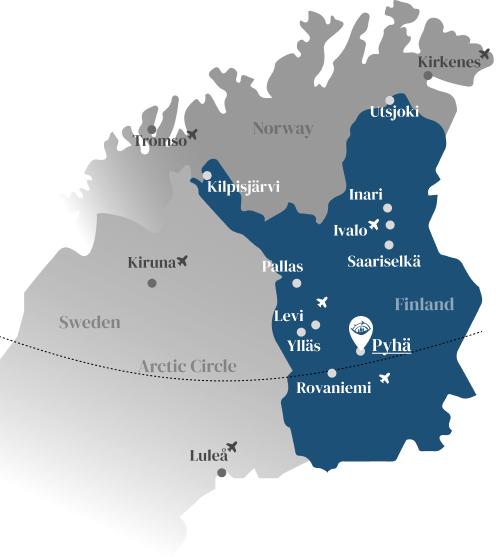
Pyhä on map

Accommodation

Kiruna’s accommodation options range from the iconic Icehotel to cozy cabins and modern hotels. Many places to stay feature glass-roofed rooms or special aurora domes, allowing guests to watch the Northern Lights from the warmth of their bed. Whether you choose a traditional lodge or an ice suite, you’ll find a stay that connects you with the Arctic landscape.

Activities

Kiruna offers a range of exciting winter activities that showcase the Arctic landscape. From exhilarating dog sledding and snowmobiling to peaceful snowshoeing and ice fishing, there are options for every kind of traveler. A visit to the Icehotel is essential, whether to stay overnight or take a guided tour of its incredible ice art.

For adventure seekers, ice climbing and skiing in the nearby mountains provide an extra thrill. Northern Lights safaris are a highlight, offering one of the best chances to see the aurora borealis light up the Arctic sky.

Planning Your Visit to Kiruna

Kiruna is the northernmost town in Sweden, located at around 67.8°N in the Swedish Lapland county of Norrbotten, well above the Arctic Circle. It sits in a landscape of birch forest, frozen lakes, and mountain terrain, with the Kebnekaise massif visible to the southwest. The town was established in the early 20th century to support the iron ore mining industry and has been shaped by that history ever since.
Kiruna sits within a region of long-standing Sámi heritage, and reindeer herding remains an active part of life in the surrounding countryside. Visitors can join guided reindeer farm visits to learn about traditional herding practices, try driving a reindeer sled, and hear directly from Sámi families about their relationship with the land and the seasons. These experiences offer a more grounded introduction to indigenous Arctic life than is typically available in larger resort destinations.
Yes. Kiruna is in the process of one of the largest urban relocations in modern history. The LKAB iron ore mine beneath the town, one of the largest underground mines in the world, has caused ground subsidence that makes large parts of the existing town centre structurally unsafe over time. The decision was made to relocate the town centre several kilometres to the east, with new civic buildings, housing, and infrastructure being built progressively. The move is expected to continue into the 2030s. Visitors today will find both the new town centre under development and remnants of the original buildings, some of which are being preserved or relocated.
Kebnekaise is Sweden's highest mountain, reaching 2,096 metres at its southern summit. It lies around 90 kilometres southwest of Kiruna and is accessible as a multi-day trek in summer. In winter, the mountain is a destination for experienced ski mountaineers and guided expeditions. For most visitors to Kiruna, Kebnekaise serves as a dramatic backdrop rather than a summit objective, though the surrounding landscape can be explored on snowshoe and ski tours departing from the valley below.
Yes, and conditions are consistently good. Kiruna's latitude places it within the auroral zone, and the dark winters with minimal light pollution outside the town centre provide long windows for viewing. The season runs from September through March. Nearby Abisko, around 100 kilometres to the west, is particularly well known for Northern Lights viewing and has an Aurora Sky Station operated by the Swedish Tourist Association, making it a straightforward day or overnight trip from Kiruna.
Kiruna Airport receives daily flights from Stockholm and connects to several other Swedish cities. The town is also served by the overnight train from Stockholm, a journey of around seventeen hours that passes through the Swedish Lapland landscape. From Kiruna, Jukkasjärvi and the Icehotel are a short drive, and Abisko is reachable within an hour and a half by road or by the Malmbanan railway line.